Maritime Security Report: 12th - 18th October 2026
This week saw fourteen incidents globally, including: Black Sea, Strait of Hormuz, Persian Gulf, Gulf of Oman and Red Sea.
Download the full report here:
Executive Summary:
The maritime security environment deteriorated this week, and the risks tied to the Middle East conflict are no longer confined to the Strait of Hormuz. Attacks have reached the central Persian Gulf and the approaches to the Gulf of Oman, and the strait itself remains under open contest, with Iranian claims about closing it and about mines that independent monitors could not substantiate. Vessels face threats while transiting, while waiting at anchor and while loading at export terminals, so route planning alone can no longer manage the exposure. Small-boat attacks on tankers in the central Gulf add a tactic and a location that many operators had not planned for.
In the Black Sea, the war continues to impose heavy costs on commercial shipping. Drone strikes have hit vessels close to Bulgarian and Romanian waters, including ships at anchor, which raises the exposure of shipping near NATO member states and has already drawn a diplomatic response. Missing crew, burning chemical tankers and the potential for serious pollution make each strike more consequential than the loss of a single hull. Elsewhere, the Red Sea and Gulf of Aden present a different and more mixed picture. Houthi capability against Saudi export infrastructure remains a concern, while an armed approach on an LNG tanker shows that piracy persists and that well-prepared security teams can still defeat it.
Overall, the operating environment is increasingly shaped by conflict-related risks spreading across commercial routes, rather than by isolated incidents in familiar hotspots. Uncertain attribution, unreliable claims from state actors and attacks on ships outside the established transit corridors all reinforce the need for heightened vigilance and continuous reassessment of risk.

Major Incidents Include:
STRAIT OF HORMUZ:
Container Ships Targeted, One Sunk: Four vessels were struck by unknown projectiles on 13 October, three of them container ships. One of them caught fire and sank. The IRGC declared the Strait closed and claimed two supertankers hit mines, though JMIC found no substantiation for the claim.
EUROPE:
Black Sea: Lethal Drone Attacks off NATO Coastlines: A cargo ship sank after a drone strike off Krapets, Bulgaria, leaving eleven crew missing. Off Sulina, Romania, eight crew of the chemical tanker Wine Trader remain missing after a fire amid suspected drone activity.
GULF OF ADEN:
Armed Approach on LNG Tanker: A seven-person skiff fired on an LNG tanker off Al Mukalla, Yemen, and withdrew after the security team returned warning shots. The incident is treated as suspected piracy.
PERSIAN GULF:
Attacks Spread to the Central Gulf: The VLCC ST3 was struck and disabled off Al Jubail, Saudi Arabia. A second tanker nearby was hit by an RPG fired from a small boat, a change in both tactic and location.
Europe:

October 12 / UAV Attack:
Three aerial drones struck a coastal freighter underway approximately 18 nautical miles east of Byala, Bulgaria. All fifteen crew were evacuated to Varna, and five sustained minor injuries. No party has claimed responsibility.
October 12 / UAV Attack:
A cargo ship bound for Braila, Romania, was struck by aerial drones approximately 17 nautical miles east of Krapets, Bulgaria, and subsequently sank. Five crew members have been rescued, and eleven remain missing.
October 14 / UAV Attack:
A fire broke out on the Comoros-flagged chemical/oil products tanker YARA J while it was anchored approximately 9–10 NM from Sulina, Romania, with the crew reporting a drone strike. The fire was extinguished, and no injuries were reported.
October 14 / UAV Strike:
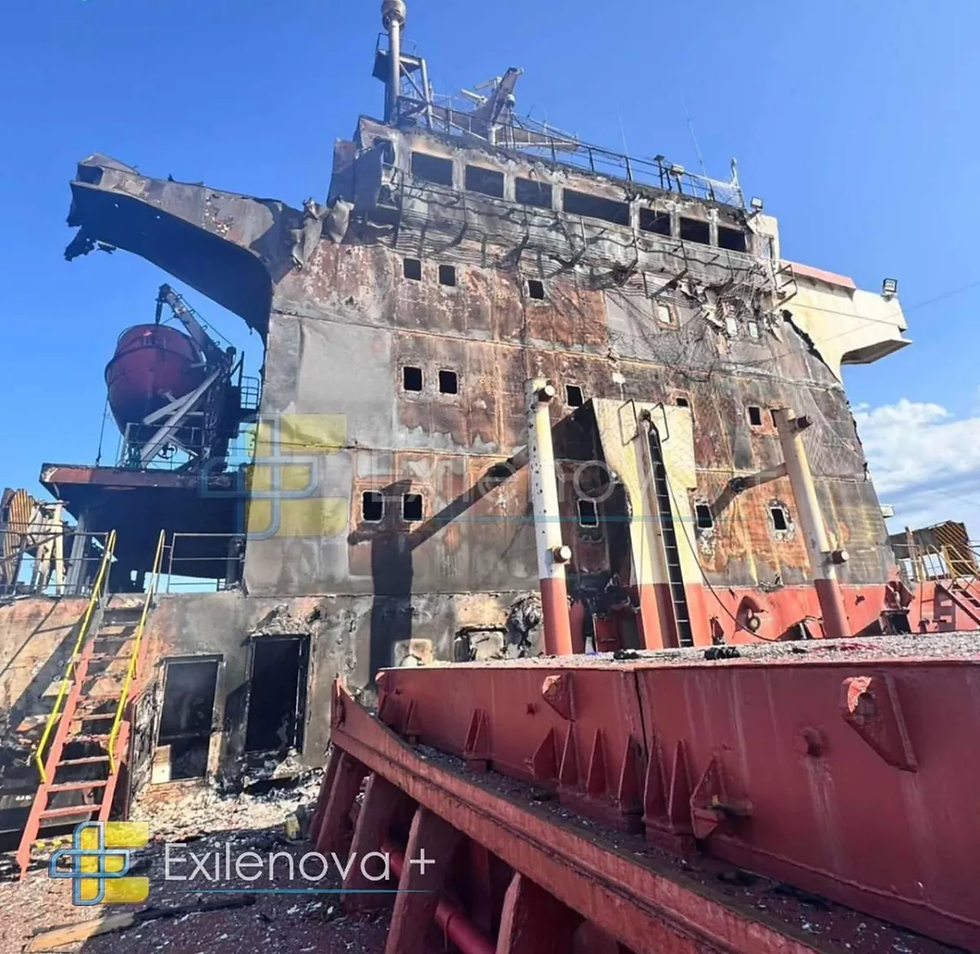
Eight of the 12 crew members of the San Marino-flagged chemical tanker Wine Trader remain missing after a fire broke out while the vessel was anchored approximately 13–14 NM southeast of Sulina, Romania. The cause of the fire has not been confirmed.
Strait of Hormuz:
October 13 / Strike:
A container ship was struck by an unknown projectile during an outbound transit of the Strait of Hormuz, caught fire and sank the following day. All crew were evacuated with no injuries.
October 13 / Strike:
A tanker was struck by an unknown projectile during an outbound transit of the Strait of Hormuz. The vessel continued its voyage, and no crew injuries were reported.
October 13 / Strike:
The 50,000-tonne container ship GFS GISELLE was struck by an unknown projectile during an inbound transit of the Strait of Hormuz. It suffered minor damage and continued its voyage, with no injuries reported.
October 13 / Strike:
The 19,000-tonne container ship AL SAADIYAT was struck by an unknown projectile during an outbound transit of the Strait of Hormuz. It suffered minor damage and continued its voyage, with no injuries reported.
October 17 / Strike:
The IRGC claimed two fully laden supertankers struck naval mines while transiting the Strait of Hormuz without Iranian authorisation. Neither vessel has been identified, and JMIC stated there was no substantiation for the claims.

Persian Gulf:
October 16 / Strike:
The Marshall Islands-flagged VLCC ST3 was struck by an unidentified projectile approximately 68 nautical miles northeast of Al Jubail, Saudi Arabia, suffering an engine room fire and losing power. All 15 Indian crew were evacuated safely.
October 16 / Strike:
A tanker was struck by a rocket-propelled grenade fired from a small boat approximately 78 NM northeast of Al Jubail. The strike damaged the aft port quarter, and no casualties were reported.
Red Sea:
October 16 / War Risk:
The Saudi-led coalition intercepted a ballistic missile aimed at Yanbu, Saudi Arabia’s main Red Sea oil export hub. No vessels were reported affected.

Gulf of Aden:
October 17 / Piracy:
A skiff carrying seven people fired two shots at an LNG tanker approximately 140 nautical miles from Al Mukalla, Yemen. The vessel’s armed security team fired two warning shots, and the skiff altered course. The crew are reported safe.
Gulf of Oman:
October 18 / Strike:
A tug travelling south approximately 20 NM northeast of Khorfakkan was struck by two unidentified projectiles. One crew member sustained minor injuries, and the tug continued its voyage.

Operational Guidance
Operators Should:
Watch for Air & Sea Projectiles: Maintain lookouts for UAVs, missiles and USVs in the Strait of Hormuz, the Persian Gulf and the western Black Sea, including at anchor.
Reassess Gulf Port Calls: Treat the central Persian Gulf, including Saudi Arabia’s east coast, as exposed to small-boat attacks.
Harden Vessels Against Boarding: Apply BMP-MS measures in the Gulf of Aden and report skiff approaches to UKMTO and MSCIO.
Monitor Official Advisories: Track UKMTO, MSCIO and JMIC updates, noting that many attacks go unreported.
Threat Assessment
Region | Threat Level | Assessment |
Europe | High | This is a maritime theatre where hostilities between state actors spill onto commercial traffic. The risk is persistent and tied to a conflict with no near-term resolution. Several incidents occurred within or close to the waters of NATO members, which raises the political stakes and the chance of further escalation beyond the maritime domain. Shipping is only collateral to the war’s wider objectives, and calling at anchor offers little protection. |
Red Sea | Moderate | The threat is mainly indirect for now, with energy infrastructure and export routes drawing attention more than vessels. However, the area has a long record of armed non-state actors with real long-range strike capability and an appetite for disrupting global trade. As alternative export routes grow in importance, the area becomes a more valuable target. Shipping is not under constant attack, but the capacity to resume it remains and can be activated quickly. |
Gulf of Oman | High | The Gulf of Oman is the spillover zone for Hormuz instability. It lacks the confinement of the strait but hosts large concentrations of vessels waiting at anchor, which are slow-moving and hard to defend. The threat here is as much about proximity as intent: ships do not need to be targeted directly to be caught up in a wider confrontation. The risk is lower than in Hormuz itself but should be expected to track it. |
Strait of Hormuz | Extremely High | Hormuz is the centre of gravity at the moment. It is a narrow chokepoint where a state-level actor has both the means and the stated willingness to contest passage, so commercial shipping is exposed to deliberate coercion rather than incidental risk. Attribution is murky and the information environment is contested, which makes warnings unreliable and lets escalation come without notice. For operators, the question is whether transit is justifiable at all, not how to transit safely. |
Gulf of Aden | Moderate | The threat here is of a different nature, driven by opportunistic criminal actors rather than state conflict. It is well understood, and established protective measures work, as the report itself shows. The danger is that wider regional instability stretches naval presence and attention thin, which creates openings for piracy to recover. Standard best management practices remain adequate, but complacency is the main risk. |


Comments