Maritime Security Report: 31st August - 6th September 2026
This week saw twenty-two incidents globally, including: Black Sea, Indian Ocean, Indonesia, Mediterranean, South China Sea, and Strait of Hormuz.
Download the full report here:
Major Incidents Include:
Europe:
Sustained High-Intensity Bilateral Campaign: Russian and Ukrainian forces continued near-daily strikes on cargo vessels, tankers, and offshore support vessels around Yuzhny, Odesa, Sochi, and Novorossiysk, while a Russian-flagged vessel ran aground near Istanbul after a reported attack, sustaining the region's status as the week's most active conflict zone.
Renewed Ukrainian Strikes on Russian Energy Infrastructure: A large-scale drone attack on the Ust-Luga port complex damaged oil-processing infrastructure, continuing Ukraine's campaign against Russian export capacity.
South China Sea:
Low-Level Opportunistic Theft: A single boarding of a towed workboat resulted in the theft of equipment, reflecting the region's persistent but low-intensity piracy risk.
Isolated Technical Casualty: A newly delivered vessel suffered an engine-room fire shortly after leaving the shipyard, an isolated technical incident unrelated to regional security threats.
Strait of Hormuz:
Deadly Escalation & Direct US-Iran Confrontation: Repeated projectile strikes on tankers — including one resulting in fatalities — culminated in a major US strike disabling three Iranian-linked tankers and Iran's threat to declare a Restricted Navigation Zone, driving transit volumes to their lowest level in months.

Indian Ocean:
Operation / 31st August

A tanker was involved in an incident with military forces while operating in the Indian Ocean; the Master reported the incident to authorities, with investigations ongoing.
Indonesia:
Vessel Sank / 1st September
Two crew members were killed when the Indonesian-flagged deck cargo vessel Legenda Nusantara699 caught fire, reportedly triggered by a chemical cargo leak, before the vessel burned, overturned, and sank, spilling chemical cargo into the sea.
South China Sea:
Theft / 2nd September
A tug towing the workboat ENG HUP ATLAS was boarded by five to six individuals in the South China Sea, who stole roughly $20,000 worth of equipment before fleeing; the crew were reported safe.
Engine Fire / 2nd September
The newly delivered Faroe Islands-flagged cargo vessel Skipanes suffered an engine-room fire roughly 20NM off Taiwan, prompting a diversion back to its Chinese shipyard for inspection; all 23 crew were reported safe.
Europe:
Black Sea:
Drone Strike / 1st September
Russian naval drones struck three dry cargo vessels — two at Yuzhny port and one in open Black Sea waters — with Moscow claiming the vessels carried military supplies; Russian forces also struck a logistics depot in Odessa's Usatovo district the same day.
Abandoned Vessel / 1st September
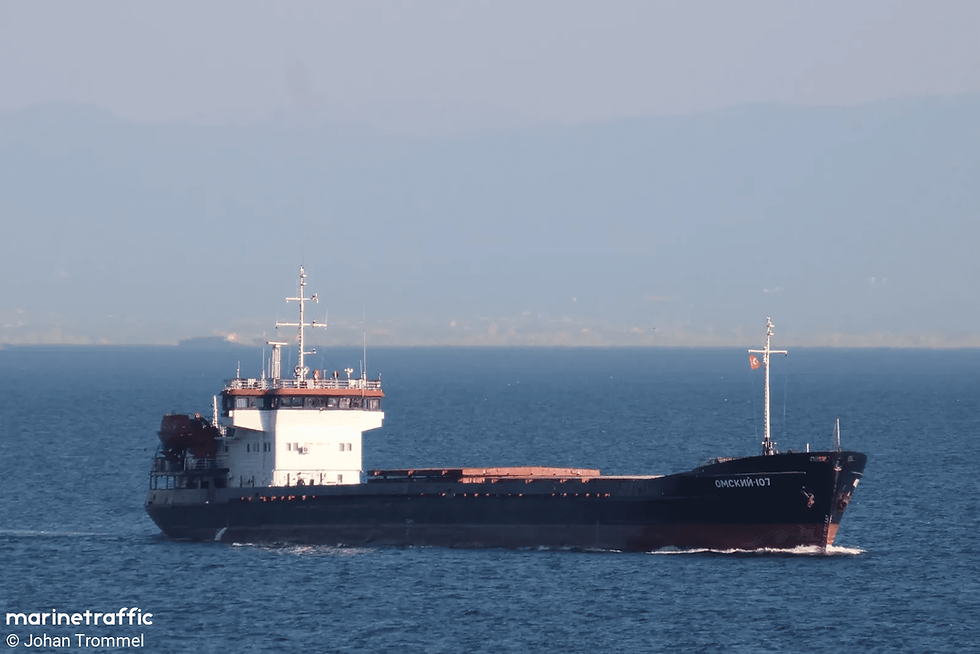
The Russian-flagged cargo vessel Omskiy-107, reportedly attacked and set ablaze off Novorossiysk, drifted across the Black Sea and ran aground off Alaçalı Beach near Istanbul after its crew abandoned ship.
Drone Strike / 2nd September
The Guinea Bissau-flagged container ship Baryon was struck by a drone while sailing from Novorossiysk to Karachi, sparking a fire that crew extinguished before the vessel resumed its voyage under its own power; all 23 Indian crew were reported safe.
Drone Strike / 3rd September
Two cargo vessels were struck by UAVs off Odesa, Ukraine, alongside a strike on the Nova Poshta logistics center and port infrastructure that Russia described as supporting Ukrainian forces; no further details on damage or casualties were disclosed.
USV Strike / 3rd September
A Ukrainian unmanned surface vessel struck an offshore support vessel at Sochi Port, Russia, with a second explosion reported near a nearby Pantsir air defence system.
Drone Strike / 3rd September
The Liberia-flagged crude oil tanker Siren was struck by drones while underway in the Black Sea, sustaining damage to its accommodation block; no injuries, fire, or oil spill were confirmed.
Drone Strike / 4th September
Ukrainian naval forces struck the Russian offshore support vessel Nefrit with an unmanned surface vessel while it was moored at the port of Sochi, part of Ukraine's campaign against Russian logistics supporting the war economy.
Engine Failure / 5th September
The Russian-flagged crude oil tanker Pioneer 1 went adrift after engine failure off Marmara, requiring tugboat assistance before being safely towed and moored at Tekirdağ Anchorage; all crew were safe with no pollution reported.
Mediterranean Sea:
Drone Strike / 5th September
A Russian-flagged cargo vessel was struck by a Ukrainian drone while transiting the Mediterranean Sea off Crete, sparking a small fire; the vessel had departed Oran, Algeria, en route to Syria.
Massive Drone Strike / 6th September

The sanctioned Russian-flagged Ro-Ro cargo vessel Lady Mariia was struck by roughly a dozen Ukrainian drone-dropped munitions near Crete, sparking fires on deck without major hull damage; the vessel had departed Oran, Algeria, and was sanctioned by Ukraine for allegedly moving weapons between Syria and Russia.
Baltic Sea:
Drone Strike / 1st September
Ukrainian forces launched a large-scale drone attack on Russia's Ust-Luga port complex on the Baltic coast, damaging an oil-processing unit and sparking a fire that was later extinguished with no casualties.

Strait of Hormuz:
Tanker Strike / 31st August
A tanker was struck by three unknown projectiles while completing an outbound transit of the Strait of Hormuz, 17NM east of Khasab, Oman; no casualties or environmental impact were reported.
Strike / 31st August
A vessel was struck by an unknown projectile while transiting the Strait of Hormuz, sustaining damage to its port side; all crew were reported safe.
Strike / 31st August
A tanker was involved in a security incident in the Strait of Hormuz resulting in two casualties, later confirmed as fatalities; no environmental impact was reported.
Military Strikes / 1st September
U.S. CENTCOM launched a large-scale wave of strikes against Iranian military and IRGC targets across multiple provinces, prompting Iranian retaliatory strikes on U.S. facilities in Jordan, Bahrain, and Iraq in the heaviest exchange between the two sides in over a month.
Incident / 2nd September
UKMTO received a time-late verified report of a tanker involved in a security incident in the Strait of Hormuz resulting in two casualties; no environmental impact was reported.
Traffic Update / 3rd September
Vessel traffic through the Strait of Hormuz fell to just three transits — its lowest level in months — amid escalating US-Iran military exchanges, with the US-assisted southern corridor accounting for the vast majority of projectile strikes since 6 July.
Ballistic Strike / 5th September
US forces struck and disabled three Iranian-linked oil tankers — Downy, Stark 1, and Kylo — in retaliation for an IRGC ballistic missile attack on US aircraft carriers, as Iran threatened to declare a Restricted Navigation Zone around the Strait of Hormuz.

Operational Guidance
Operators should:
Watch for Air & Sea Projectiles: Maintain sharp lookouts for long-range UAVs, cruise missiles, and USVs across the Black Sea, Sea of Azov, and Persian Gulf.
Comply with Chokepoint Closures: Avoid entering the Strait of Hormuz due to active military engagement, unless explicitly authorized.
Deploy Maximum Active Deterrence: Ensure onboard security details are at peak readiness to repel state-level aggression and kinetic strikes in high-risk zones.
Monitor Urgent Military Broadcasts: Maintain constant watch on VHF Channel 16 for sudden navigation bans, and track emergency UKMTO, and MSCIO updates.
Threat Outlook
Region | Threat Level | Assessment |
Black Sea (incl. Sea of Marmara) | High | Near-daily UAV and USV strikes hit cargo ships, tankers, and offshore support vessels across Yuzhny, Odesa, Sochi, and Novorossiysk, with one vessel grounding near Istanbul after an attack. The sheer frequency and geographic spread of strikes keep this a sustained high-risk zone, even without confirmed fatalities this week. |
Indonesia | Medium | A single incident caused two crew deaths and a vessel loss with an environmental spill, a severe outcome despite being an isolated, non-conflict-related safety failure. The high consequence of this one event outweighs its low frequency. |
South China Sea (incl. Taiwan) | Low | One opportunistic boarding and theft, plus an unrelated technical engine-room fire, reflect routine low-level risk rather than any escalation. Neither incident involved injury or security-driven targeting of shipping. |
Strait of Hormuz | Extremely High | Repeated projectile strikes on tankers (including one with fatalities) escalated into direct US strikes disabling three Iranian-linked tankers, with Iran threatening a Restricted Navigation Zone. Transit volumes collapsed to their lowest level in months, confirming this as the week's most acute crisis. |
Europe | Moderate | Mediterranean: Ukrainian drone strikes hit two Russian-linked cargo vessels off Crete, signaling an expanding reach beyond the Black Sea. Damage was limited to fires with no injuries, keeping severity below the core conflict zones. Baltic Sea: A large-scale drone attack damaged oil-processing infrastructure at Ust-Luga, but it was a single, contained event with no casualties. Risk here tracks a specific target rather than broad shipping exposure. |
Indian Ocean | Low | The only incident was a vaguely defined encounter with military forces, with no details on outcome or nature confirmed. Insufficient information to indicate elevated risk, though it remains unresolved. |



Comments